Mostrando entradas con la etiqueta interlanguage. Mostrar todas las entradas

domingo, 15 de mayo de 2016

Pronunciation Integration #4: Selecting your pronunciation content

After some blogging silence caused by writing deadlines, burnout and a lot of belated grading, I  am back! I would have liked to write a more complete post today, but I thought I might put down a few lines on how to select the pronunciation features to teach in your lesson. I am currently covering this topic with my teacher trainees, and I believe it is a good moment to allow these experience-based reflections of mine to reach the written form! I guess I will be writing a more academic, citation-filled, aesthetically pretty post in the future. 

What do we need to consider when planning what pronunciation content to include in our lessons?

Well, a huuuge number of questions are in order (as usual!). Even though I expect to provide teachers with a somehow friendly guide as to how to make a responsible, yet effective decision, I would not want to trick them into believing that making this choice is an easy matter. So here we go!

When we say pronunciation content we are, in fact, referring to a large number of features, which I have tried to summarise in the chart below:


a) First, there's the pronunciation goals question (see previous posts on this): is your institutional/class setting aiming at  low accentedness, or  mutual intelligibility? 
If your group requires that your learners' accent reveals little of their L1 because they need to communicate in professional settings with native speakers of English and you need to do accent reduction, for example, then you have a longer list of things to consider, perhaps, as you will see below, since the inventory of features of teach may be larger. 
If you are doing English for International Communication, that is, English as the means to interact with other non-native speakers of English, the initial selection of features to teach may, in part, be inspired by Jenkins' (2000) Lingua Franca Core (see the blogs by Patsko & Simpson, and the site by Robin Walker to learn more about this). Note: in my very humble opinion, I would not treat the LFC as a conclusive list, because given your students' needs and starting point, you may want to introduce other features as well. Plus, there is always the question of what makes mutual intelligibility, as different L1s may perhaps pose different challenges regarding intelligibility with each other in English as a FL. (In this respect, you may remember the project by Nobuaki Minematsu I discussed in my PTLC15 report here)

b) Next, there's the most important source of information to consider, your students! Carry out a needs analysis (which may make you reconsider your answer to a) ) and/or a set of diagnostic tasks (if possible, recorded as an audio file), that may help you see where your students' areas of difficulty lie. Diagnostic tasks can give us a lot of information regarding our students' starting point, but they need to be designed carefully. You may want to make sure you do so by considering these points:
  • in order to have a more global view of your learners' strengths and weaknesses, you need to design a task that will enable you to test the same skills/content across the board, for example a reading-aloud task of a well-prepared passage (Note: Careful! Reading skills pose their own challenges), or a guided questionnaire with words/expressions you expect your students to use. You can write a dialogue or short passage (dialogues work better, in my opinion, as chunking is less problematic and situations are easy to perform) with enough variety in spellings, clusters, word stress or sentence accent examples to make sure you can even somehow "quantify" your results and test what you really want to test (validity). (It is essential that you go over the list of difficulties that learners of your L1 may have when using English to make sure you test the right things. See: "Contrastive Analysis" below, and check Ashton and Shepeherd, 2012; Kelly, 2000; Mott, 2011). You can then design a table/grid to see how each of your students tackled the problem areas or "traps" in their reading.
  • a semi-spontaneous speaking task is unbeatable when it comes to testing what our students' starting point is. We can ask our learners to introduce themselves by following guiding questions, or telling an anecdote, or reacting to a picture or stimuli. These less controlled tasks will give you clear a indication of their interlanguage errors and already-acquired features. As a result, you should have a more or less accurate snapshot of your learners' starting point, individually.
  • and/or you may want to carry out interactive tasks for pairs of students to role-play. Working with a partner helps students to lower their affective filters and may, to a certain extent, also soothe "recording anxiety". These tasks allow you to see how students  interact by employing their interlanguage accents and communicative competence.
(Of course, you should always be aware that your task and the recording activity themselves may induce shyness, as well as other performance difficulties or disfluencies.)

c)  Then, naturally, you will need to take a look at your (pre-set) syllabus and textbook. No, I am sorry to say  I am not implying that your textbook will in any way help you decide. With just a few exceptions, pronunciation tasks in textbooks (sorry, authors and publishers), are very poor, IMHO. But your textbook may have a lovely Word List at the end with the key lexical items you will be teaching . It will also list the grammar you will have to present. It has a tapescript section with the material your students will hear in spoken mode. It presents a number of reading materials with structures and vocabulary your students will be working on.

If you work at one of those places where the syllabi are "imposed", you may have been provided with a tentative syllabus, which will surely list the lexico-grammatical features to be attained by your class (and hopefully, if you are very, very lucky, perhaps some reference to what pronunciation features to teach). And if you take all the lexical and grammatical content, comb your reading and listening texts, and check the oral genres and spoken functions you will be covering....you will have an awful lot of information as to what pronunciation features you will encounter, albeit indirectly, lesson by lesson!

How do we use this information?

Now that you know what features your learners as a group may need to cover, and what individual challenges you need to work on, as well as what linguistic content you will have to teach, you can start making further decisions, which will depend on a number of factors, listed below in no particular order:
  • Contrastive Analysis: even though it has been undermined, the Contrastive Analysis Hypothesis (Lado, 1957) does provide us with a good way of anticipating which areas may bring about trouble for our learners, given the differences between English as L2/FL, and their own L1. For instance, in Spanish /p/ is not taxing at all, as there is a match in the place and manner of articulation in both accents. However, aspiration does need to be taught for this sound. So making a contrastive analysis of features will already narrow down the list of features you may need to tackle.
  • Similarity-Dissimilarity: the Speech Learning Model (Flege, 1992) also helps us re-visit our list of features by aiding us in the identification of those features that may perhaps take longer to acquire by L2 learners of English and may get fossilised, and thus, may require constant recycling and remedial work. For instance, sound /d/ in English may be perceived as similar to Spanish by learners, and as a result, fossilisation of Spanish [] for English may be more common than for other sounds. 
  • Frequency of occurence: I am not necessarily here considering the frequency of occurrence of the features in English (though it does certainly help to select what to spend time on!), but the frequency at which a certain pronunciation feature appears on your syllabus of linguistic content and skills. E.g.: Weak and strong forms are inevitably related to all tenses in English, since auxiliaries are ubiquitous. The velar nasal /ŋ/ is everpresent in continuous tenses. (See other posts on pronunciation integration here). Scanning your textbook's word list per unit will also give you an idea of what sound, spelling-to-sound rule, or suffix appears more often. Looking at what linguistic actions and functions you will be teaching (e.g. requesting, giving advice, etc), may help you see what intonation patterns can be of use.
  • Functional Load: The concept of functional load (Catford, 1987) can also contribute to our decision as to what features should be taught for intelligibility purposes based on contexts where they are contrastive . We know, for example, that sounds /ʃ,ʒ/ are only distinguishable in a really small number of words (just 4 minimal pairs?), which is why this combination in contrast has a low functional load. Word Stress, on the other hand, is to be prioritised (Derwing and Munro, 2015), as its functional load in distinction is important. Note: even though the theory claims that pairs like /d,ð/ have a low functional load, Spanish speakers, because of the allophonic split in comparison to English, will definitely need to be made aware of the distinction. So this particular criteria, in my humble opinion, needs to be taken with a picnh of a salt.
  • Systematically, incidentally or "collocationally"? The previous criteria may help you decide what features you may want to systematise properly and in detail, following a set of stages (ear training --> presentation--> guided and feer practice), and which features you may want to teach or correct "in passing" as a result of  mispronunciation or miscommunication while carrying out an activity. You will also need to decide if you want to teach the feature for students to start applying across the board, that is, by teaching the right spelling-to-sound rules, or pragmatic functions of intonation, for instance, or if you want to present it as a "collocation": that is, the feature accompanying the word or phrase (see my post on the intonation of viewpoint adjuncts).  For example, we know /ʒ/ is not a very ferquent sound in English, which is why you may teach it when you teach the word "usually" (which we introduce quite early in elementary courses when teaching the Present Simple!). You can always extend the application of this new feature by referring back to the previously-taught collocation; e.g: so when you find the word "visual", you remind students of "usually"
  • For perception or for production purposes (or both)? As we know, thanks to Richard Cauldwell, perception and production need different models, and the way we handle phonetics is indeed different in both models. We need to decide what we want to help our students to produce, and what we need to teach to train their perception and enhance comprehension. We may have to systematise some processes of linking, co-articulation, assimilation and elision for students to produce, but these elements will definitely find a better home in our listening lessons.
  • Teachability: this is the most difficult criterion to define. I believe that teachability needs to be defined by the group of students we have (age, motivation, phonetic coding ability, previous exposure and instruction) and our teaching context (time constraints, possibilities for extra practice, possibilities for further exposure...). We do know, however, that everything can be made teachable if we are creative enough and if we do enough research (sometimes based on our own trial and error experiences in the classroom).
***
Some final remarks:

I generally tell students that we have a sort of "moral duty" to teach pronunciation. Our instructional context may not always demand that we do, but if we are teaching the language, and we are training users of the language (and not just "writers" of the language), we have to teach the phonological features accompanying the lexico-grammatical content we introduce. Otherwise, we are somehow cheating our students. Or so I believe.

Teaching pronunciation effectively is about being selective. I have listed a set of criteria to choose what to teach, and when planning our lessons we need to take a "leap of faith", and decide to leave a few features out for next years' teacher to handle (hopefully!). We cannot cover it all (as we don't do with lexis, or grammar), and we shouldn't either. Decide what to be "incidental" or "collocational" about, and what to systematise in greater detail.

If you are selective, and make the most of integration techniques and choices, then you should not have any excuse not to do pronunciation work! You are doing pronunciation as you do grammar, vocabulary, reading or listening! (And you keep your coordinator, parents, and international exams happy as well as fulfilling your "moral duty" as a language teacher!)

Finally (for now, at least), success in pronunciation -this wonderful motor-cognitive skill-, is dependent on continuous practice. We need to provide constant prossibilities of recycling, re-noticing pronunciation features in new and old contexts, and we have to ensure continuous remedial work. Our body has memory, indeed, but we need to reactivate it as frequently as possible. And so we need to do when it comes to spelling rules, or to the abstract meanings of  intonation, for example.

***
Once again, hope you have found this useful. (If you need to cite this article, please check the "How to Cite this Blog" tab on top). Good luck in your feature selection!



lunes, 11 de mayo de 2015

Pronunciation, Phonesthesia and Realia: The case of the STRUT vowel (Part 2)

In my latest post, I compared General British STRUT and its variants to Riverplate Spanish /a/. I reviewed some articulatory and also acoustic features, and I also went over some basic notions of Speech Perception theories. I established that many of my Riverplate Spanish learners may associate English /ʌ/ with their Spanish /a/ "magnets" and may, thus, find the differentiation between both vowels challenging, both for perception and production.

(BTW, apparently, the differentiation between English /ʌ/ and other vowels appears to be quite an issue for many speakers of English as an L1 or L2, as Ettien Coffi (2014) reveals in this paper from the Proceedings of the 5th Pronunciation in Second Language Learning and Teaching Conferencepage 11 onwards)

In this post, I would like to present some of the tips & tricks I have collected over the years (and I will try to acknowledge my colleagues' contributions whenever I can!). My claim will be that many "tips" do the job when they help create an image of the L2 sound which may help the learner steer away from their L1 quality, and that this may not necessarily just be reliant on making the right articulatory movements.

This is why some of my suggestions will draw on creating "mental images" through the contributions of Phonesthesia, and Realia; images which should appeal not only to visual aspects, but also auditory, and emotional resources.
***
A few definitions first:

Realia refers to the introduction of real-life objects in the classroom, to make the learning experience of certain concepts and routines more vivid. This technique also enables students to engage all their senses and learning styles. We can introduce actual objects, or we can create virtual situations that may allow students to experience similar emotions and actions as those recreated in the real situations.
(You can get some teaching ideas on using teaching aids in the TEFLSurvival blog, and the BusyTeacher website.)


Phonesthesia refers to the analysis of "sound symbolism". It basically studies how clusters of sounds may center around lexical sets that express similar meanings. So for example, in the Dictionary of Sound by Margaret Magnus, you can find a number of STRUT words that could be related to "puffy things":  plush, fuzz, fluff, cuff, muff, ruff.

This reminds me of a poem by Tony Mitton, called "Fluff"

What's this here?
A piece of fluff.
I don't know where I get this stuff.
I'll blow it away
with just one puff.
Huff!
There. That's enough.

So the combination of vowel /ʌ/ and the /f/ quality, reminiscent of blowing, creates this "puffy" effect of fluff and makes the poem lovely for oral performance, and effective! 

***
As a College student, I had a hard time fine-tuning my STRUT away from my Spanish /a/. I was given instructions, I  knew I had to drop my jaw, but still, it sounded pretty much like my own Spanish /a/. (Mind you, my friend and colleague Prof. Francisco Zabala has found that the STRUT quality as an allophone is present in many Spanish combinations of "a" + sound /x/, as in "caja".)  And I see my students at Teacher Training College producing a similar type of Spanish /a/ sound. So after a few tries, after watching native speakers of English produce their STRUT sounds, analysing the way this jaw-dropping takes place for this sound, I came up with the first articulatory tip that worked for some of my students:

"Keep to the railings of the mouth". I asked my students to imagine that each of the two sides of their lips, or the corner of their mouths, had a vertical railing, and that there should not be any smiling, as it would defy the railings of the mouth, and that the articulatory movement should be downwards, not sidewards. I could not help thinking of these special types of puppets ventriloquists use:

Celebrity puppet
Image credit: David Noah. Flickr:https://www.flickr.com/photos/davidnoah/5170268541/

With this idea in mind, in one of my lessons, students were asked to place their fingers in the corners of their mouths in the puppet-like manner above, and look at themselves in a mirror/front facing camera of their mobile phones while producing STRUT words, trying to avoid a smile (which was tough, as they were having fun!).Therefore, this sound became the "puppet" sound (and for older Argentinians, this was the "Chirolita" sound, after a well-known ventriloquist in Argentina).
This articulatory tip did the trick for many students, but yet, not all of them really got to acquire a close quality; many students still produced a much fronter, or sometimes, opener vowel.

So I resorted to phonesthesia, and I thought of a few words I associated with the STRUT quality. By repeating the STRUT vowel to myself in isolation, I came up with these words (and a few others, after trying the marvellous Sound Search tool in the Cambridge Pronouncing Dictionary CD-Rom!)

  • Things falling and making noise: thud, plunge  
  • Unpredictable, shocking: abrupt, blunt, rough
  • Pushing, stabbing(?): thrust, chuck, cut, nudge, punch, butt

(BTW (deviation alert!), as a Miranda Hart fan, I could help laughing at myself while repeating these words!)

So with some groups of students, I tried playing around with the words above, getting into the mood of things "falling" or happening "abruptely", which acts in much the same way the downward movement of the jaws does, like a small "bite", even.

Encouraged by the success of this tip for some students, I started thinking about the realia of "emotions", the "tone" that this sound evoked in me, and I could not help feeling "dull", "disgusted" or "miserable", as with these words:
  • love
  • money
  • you suck!
  • duh!
  • yuck!
  • f*#k
And I said to myself (and forgive the vulgarity of it all!), "what makes you suffer? Love, or money?". So I asked my students to think about their most "miserable" feeling, place themselves in that "sad place" (a bit like many actors do), "pull a miserable face" and go for /ʌ/ . 

Credits: http://i3.mirror.co.uk/incoming/article4311979.ece/ALTERNATES/s615b/Kim-Kardashian-and-Kanye-West-arrive-for-a-dinner-at-Hakkasan.jpg
(I have a confession to make: I sometimes ask my students to produce the f-word. It works! Perfect STRUT qualities EVERY time!)

When using this strategy a few years ago, a student came up with the memory of losing a match as a kid, and remembering his father's disappointed reaction (a very sad place to go to, if you ask me!). So we worked on that emotion, and we created a situation in which a very stern father or mother would push their son or daughter to win a race. And I came up with this terrible (!) poem/song, with a "run, run, run" chorus to the melody of Pink Floyd's "Run like Hell". It does sound like a bitter and very dark poem, but as a dramatic technique, it did the trick!

In one of the lessons where I tried the poem, students worked in two teams, with one group acting as an audience, singing the "run, run" Pink Floyd chorus, and a second group "mumbling" the words of the poem as they all pictured the race and their son running. The "little play" that resulted of this poem reminded me of Hermione in the audience uttering the Confundus charm and Harry saying "Come on, Ron" in a sort of low murmur (Deviation alert #2!):


***
Somehow this idea of a "miserable" STRUT sound has been the most effective tip to help my students provide a version of /ʌ/ that drove them closer to a quality different from their Spanish /a/, and also from the "Happy, cheerful, /æ/" and the "Relaxed, cute, awwww-like, /ɑ:/":

***
As with everything, you can find your own way of adapting these tricks for your own lessons, taking into consideration the "classroom management" factor, because let's face it, pronunciation work may create a bit of a mess in the classroom!

And of course, as Adrian Underhill claims, multisensory pronunciation learning is the key. Building one's own proprioception, and supplementing this with mental, auditory and emotional images should, in some way or other, contribute to the uniqueness of our learners' styles and processes. As I always say, what may work for one student may not necessarily work for the other! (Another piece of evidence for the "messy" nature of pronunciation work, sorry to say!)

***

Final thought: It is funny that many of the nice things of life may also take STRUT, and they don't seem to "fit" with with sound. What shall we do about 
love, fun, feeling chuffed, abundance, bubbles ...and maybe, money?
I leave that to you!


viernes, 1 de mayo de 2015

Pronunciation, Phonesthesia and Realia: The case of the STRUT vowel (part 1)

With the release of Adrian Underhill videos, I can now re-live some of the presentations of the IPA that my Phonetics tutor and trainer, Prof. Graciela Moyano, introduced when I was a first year student at College. It's just brilliant to go back to those moments of discovery of how our articulatory system works.
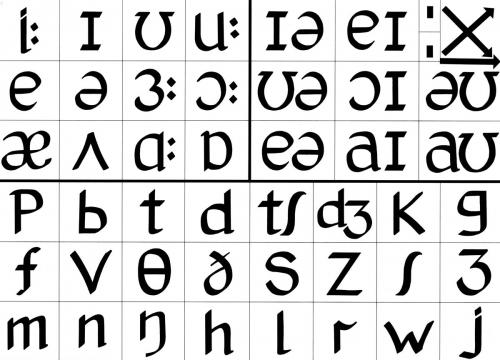
Adrian Underhill's phonemic chart. (I would probably do away with the centring diphthongs as they stand, using /ɛ:/ for /eə/ and maybe still keep /ɪə/)

I have completely embraced Adrian's belief and knowledge that "pronunciation is physical", and this motor side of pronunciation and our awareness of articulation through the different "buttons", as he calls them, is essential. However, out of his presentations, my independent reading, and my own teaching style, I have found that part of the process of acquisition of L2 features also lies on the images that we make of what the L2 features sound like.

Over the years, I have discovered that part of the fine-tuning processes we need to carry out to learn the sounds of L2 also involve affective aspects, including our own affective memory, and feelings. I have experienced situations in which students appear to be making the right articulatory movements, and still, there is something in the quality of the sound that does not "sound right". And in those cases, what I noticed is that it is the recourse to mental and affective images related to the sounds that appear to do the trick, rather than just the right lip or jaw position.

So in this post (which is, obviously, not a report on experimental research, so don't expect it to be so!), I will be going over a few techniques that I have used to include phonesthesia and realia in my pronunciation teaching. My focus this time will be on the STRUT vowel, /ʌ/, one which gave me a lot of trouble as a learner!

I will be covering a few different theoretical and practical areas on this post, which is why it will be divided into two:

Part 1: 
  • Speech Perception theories: a review with links to further reading materials.
  • English vowel STRUT /ʌ/and Spanish vowel /a/: a review.
Part 2:
  • Tips and tricks to teach STRUT
    • Articulation
    • Realia
    • Phonesthesia

***

Images, Categories, and Speech Perception Theories

When writing my research paper for my specialisation course in Phonetics I in 2006, I came across a huge number of acquisition and psycholinguistic theories which really helped me to make sense of and inform my teaching practices. Even though I am not an expert in acoustic or perceptual matters, I believe that some basic knowledge of theories of Speech Perception can actually aid our comprehension of what happens to our learners when faced with L2 pronunciation challenges.

Speech Perception Theories state that perception is categorical and not continuous (Liberman, 1985), that is, we perceive categories, no matter whether there is individual variation, and thus, we group sounds according to our perception. We can, in other words, say if a certain set of sounds are the same, or if they are different, despite the realisational differences of those sounds. The Perceptual Magnet Effect theory by Kuhl (1991) addresses similar issues for vowel sounds, by exploring in more detail how we can perceive the space or distance between the different variants we hear, to somehow establish what degrees of variation can be significant for us to associate a certain sound or stimulus to either another category, or to a "bad" (so to speak!) version of the category under scrutiny. This all appears to work pretty well for our L1, though there are a few "traps", as the McGurk effect reveals, when the information that the different senses provide do not appear to match:

If anything, the McGurk effect proves that we draw information from different multimodal sources, which is a very useful thing to know for those of us who train in L2 perception and production!

Now, when it comes to perception of L2 sounds, the "same-different" categorisation may fail, as we tend to interpret our L2 sounds from our own L1 targets, as Flege's Speech Learning Model (1995) states. So if we consider Kuhl's and Flege's models, we can predict that certain L2 qualities, if close to certain L1 targets, will be perceived as similar, and thus, learners may take longer to acquire them and create new categories for them.

Our learners, then, may create a mental image of what a particular L2 segment sounds like in the light of their already-existing images of the sounds in their L1. This means that in order to improve perception and production, we need to create new images and categories that will establish a perceptual distance between L1 and L2 sounds.

So in this post, I would like to explore the fact that one of the ways in which we can displace the L1 images in favour of L2 categories is by creating images that may exceed the information that the visual and tactile senses can give us for the articulation of the sound, and even the auditory information we can initially get. I would like to propose ways in which affective and visual memories can activate these new sounds in the shape of perceptual images.

***
The STRUT /ʌ/ vowel in General British

Cruttenden (2014:122) describes the STRUT vowel as a "centralised and slightly raised CV [a]" and he acknowledges the presence of a back-er quality [ʌ̞̈] in Conspicuous General British speakers, though this quality also appears to be heard more often in GB (I agree! See below). The jaws are said to be separated considerably, and the lips, neutrally open. There is an MRI of a phrase containing STRUT in Gimson's.... companion website here.

Collins and Mees (2012) have defined STRUT as a central, open-mid checked vowel, and admit a certain degree of variation, but especially in terms of fronter qualities. In much the same way, Mott (2011:117) describes STRUT as being "slightly forward of centre, just below half open, unrounded".

The abovementioned authors would then place STRUT somewhere around these areas:
Dark purple: STRUT, according to Mott & Collins and Mees. Light purple: Cruttenden (2014) and the backer quality [ʌ̞̈] he describes as a variant.

Geoff Lindsey has a great post called "STRUT for Dummies" with a myriad audio examples that illustrate his comments on the historical and present variation of STRUT, wavering between [ə] and [ɑ]-like qualities.

Many Argentinian colleagues and I believe that STRUT appears to be moving closer now to an [ɑ] quality, at least for many young speakers. I cannot claim to have the knowledge or "ear" that Lindsey happens to be blessed with, but here's an example of what I believe I hear pretty often:

Compare this young YouTuber Zoella's versions of "love", "until", "one", "somebody", "bump", "tummy", "just", "hundred". Apart from being great examples of intra-speaker variation (I personally don't hear all the versions of the word "love" with the same STRUT quality), there are some other interesting processes going on . (Also, a great taste of the kind of TRAP vowel I hear now, so different from General American versions!).

(BTW, according to Wikipedia, Zoella is from Wiltishire, and currently living in Brighton. What would you say her accent is?)

If we see these variations in acoustic terms (disclaimer: not at all my area of expertise...yet!), we can find in Rogers (2000) there is a table presenting formant values for RP vowels, based on a measurement of adult male speakers in Gimson, 1980. In that measurement, RP /ʌ/ has got the following values:
F1: 760 Hz
F2: 1320 Hz
( Confront with the values that the study by Wells in his 1962 study  had established F1:722, F2: 1236 )

(BTW, in simple terms, F1 inversely represents the articulatory tongue height, so that its higher frequency value represents lower tongue height. F2 represents degrees of backness, with lower values representing back-er vowels).

A study conducted by Hawkings and Midgley (2005) in four different age groups found the following mean formant values for these age groups:

  • F1:630 -F2:1213 for over 65s (higher than the previous studies mentioned, and a bit backer)
  • F1:643 F2:1215 for those speakers between 50-55 (lower than the over 65s, but equally central-back)
  • F1:629 F2:1160 for speakers in the age range 35-40 (higher than those 10 years older, and backer)
  • F1:668 F2:1208 for speakers aged 20-25 (lower than the other groups, but not as back as those speakers a bit older)
So according to this study, in comparison with the previous measurements reported, it would appear to be the case (at least for the speakers surveyed) that younger generations have a lower, and to a small degree, back-er STRUT than older generations).


If you are interested in pursuing this further, there are some interesting studies by
Ferragne and Pellegrini (2010), measuring vowels in 13 British accents.
Sidney Wood (SWPhonetics) analysis of different RP speakers' vowels across time.

***
Riverplate Spanish Vowel /a/

A contrastive analysis between General British and Riverplate Spanish (RS), and also the contributions of Speech Perception theories would lead us to expect that those students with RS as L1 are very likely to interpret English STRUT in the area of Spanish /a/ (not to mention distributional differences!). (BTW, in 2013 I attended a talk by Andrea Leceta at the III Jornadas de Fonética y Fonología, in which a comparative and experimental study on these features had been made, and the results confirmed these expectations. The proceedings have not yet been published, I am afraid.)

García Jurado and Arenas (2005) discuss Riverplate Spanish /a/ as having a wide degree pharyngeal of constriction (following the studies by Fant (1960) that focus the analysis of vowels based on the levels of constriction along the vocal tract) and clear oral opening and lack of lip rounding. They establish a mean F1:800 and F2:1200 values, which appear to match the degree of backness found for current versions of STRUT, though Spanish /a/ is much lower than English /ʌ/. 
Location of Spanish /a/ by Mott (2011)
You can see a cross-section of the articulation of /a/in Spanish and in English in these captures from the University of Iowa's Sounds of Speech app.


 Spanish /a/
(American) English /ʌ/


***
There appears to be an interesting similarity between Spanish /a/ and GB English /ʌ/ that lies mostly in the central part of the tongue employed, and an interesting difference, that is related to the height of the vowel and the level of jaw dropping, much higher than in Spanish, although they are both mid-to-low vowels. And still, it appears to me -and this is a very personal appreciation- that it is not jaw-dropping alone that makes our RS /a/ different from GB  /ʌ/. And my teaching of the sound over the years has also proven to me that jaw-dropping alone does not do the trick.

It may or it may not make sense to teach the exact quality of this sound to RS speakers, and it will depend on whether the focus of the lesson is on accentedness or on intelligibility, but the truth is that for an RS speaker, there needs to be a contrast between the three different qualities making up the contrast STRUT-TRAP-BATH in English, which to RS speakers may be only subsumed into one. 

So the next part of this post, coming up in a new weeks, I will present some "tips and tricks", rooted on some phonesthesic ideas, and also on realia techniques, that may help RS speakers turn their Spanish /a/s into STRUT.


After-post addition:
A reader rightly pointed out that I have not presented audio examples of my own of the difference between both sounds. So this is how I pronounce Spanish /a/ and English /ʌ/, and below you will find two Praat captures of the spectogram and formants of the same versions:


My Spanish /a/

My English /ʌ/

miércoles, 11 de febrero de 2015

Reflections in passing #3: Why emulating a native-like accent may not (always?) help


Over the last few days I have been talking to colleagues from my own "environment" (that is, Argentinian teachers of English), and some have told me that they saw themselves reflected in some of my posts, particularly the "Voldemort" one. And yes, I completely understand why these friends and colleagues feel the way I do, and the rest of the world feels this is sheer craziness: our training, our Argentinian spirit (always looking up to Europe, for some reason) makes many of us want to "sound native" (whatever that is!). Some other Argentinian colleagues teaching French and Italian have told me they feel the same way about their own accents.

***
Now, the more I travel, the more I realise that my relentless efforts to "sound native" may not "help" in the streets. All right, my accent has helped me gain a certain position of "acceptance" (or something of the sort) in some academic circles. I know that there are certain things I say in certain places which are "taken seriously" because of my close attempt at an SSBE accent and my fluency in English. In academic environments, I have to admit that, sadly, some some people appear to have "respected" my views because of my accent, and this overruled the "disadvantage" (sic) that being a Latin American, Spanish-speaking teacher of English (and phonetician in the making, go figure!) would entail (and these last few words are not, unfortunately, mine!).

On the other hand, I won't lie. I do like the occasional "where in the UK are you from?" or "You don't sound Argentinian!" thing. I think it is my best introduction card in, at least, the ELT world.


***
As usual, disclaimers: these are opinions, reflections and anecdotes from someone obsessed with pronunciation, and carry no "scientific value". You read these at your own risk!
(♪♪ It's my blog, and I cry if I want to, I ramble if I want to! ♪♪)

***

Anyway! Going back to how sounding native may *not* help, I have a number of personal anecdotes which may illustrate the point:

-On a train to London from York, I ordered coffee. As I was being served, the steward -with a lovely Northern accent- asked me a question which I did not get, and after embarrasingly saying "Sorry?" three times, he just put the coffee on my tray and grunted. I shrugged, and the person sitting next to me, who had seen I was reading a book in Spanish, said that the man had thought I was making fun of him.

-The bus from Whitby to Scarborough I was on one day, broke down. Twice. (Yes, it happens in the UK, too! Don't despair, fellow Argentinians!). I was sitting towards the back of the bus, reading my book, and two lads  were talking about how awful the whole journey had been, and a few other things which I found dreadfully difficult to understand. At a certain point, one of them addresses me, and says what I decoded as: "Got a penner?". I replied "Sorry, come again?", to which I got a similar answer. The other man looks at me, as if I was silly or something, and says, really slowly "Got-a-pen-or-something?". "Ah, yes, here you are!", I said, and retreated to my Spanglish, to save face.

-The other thing that I find a bit embarrassing is the fact that my English is pretty "bookish" (I need a serious vocab refresher course!) and as a Latin American young lady, I'm all gestures and emotion, so British people who know me do generally comment on this sort of "mismatch" between my accent, and my wording. I love my Latin American blood, and my Italian hystrionism, and I am not planning to change that. But people say the "overall impression" is somehow "weird". My tutor once told me that when she was younger a very well known phonetician advised her: "Do you want to sound English? Then hire an English lady who can teach you how to sit, have tea, walk, and express your emotions as an English lady. Then you will sound English. Otherwise, you are more than fine as you are!". (LOL!)

(Linguistic digression: I think that my trips have also confirmed to me that I should never underestimate question tags, and phrasal verbs (believe me, students, they are used ALL the time!), and more importantly, street, everyday, language, if I want the "full package". As I told my Language teacher during my last year of college, "I feel all my language courses have "crippled" my language, I can't face the streets with my English but I can write 200-page-long papers!".)

-I think that what at times makes me feel worse than not being able to understand, is getting the comment "why do you want to sound posh?". Or I once even got "You sound Victorian!". I would feel a bit offended in my own Spanish if someone said I sound "cheta" or "old as the hills", but that's just because I don't see myself as such. My British friends tend to make fun of this accent choice of mine, and I have had "informal" sessions on glottalisation and a few other "tips and tricks" to "give my accent a lifting". I worry,  and I try to be truly aware of this when teaching my students. After all, I wouldn't want them to use slang and sound as if they were rehearsing to have tea with the Queen.

(BTW, any phoneticians out there? It would be wonderful to have oral practice materials with more updated accents! Ship or Sheep 3rd Edition has a few interesting voices, and so do some of the activities in the "...in Use" series, but I would be happy to have further practice material to focus on sounds with more "modern" accents. Apart from the  YouTube vids and British Council recordings of conversation I may find, having some updated pronunciation stuff for practice would be totes fabs!)

-Another Argentinian colleague told me that a UK immigrations officer, after stamping his passport,  jokingly told him, "Why do you speak like that, then? Are you a spy?".

***
Whenever I write my blog posts, I always think about my students and my practice. I am, by far, the most severe critic of my work. I know some of my ideas have changed over the last three or four years, and some others have not, and may not. I know some people may use these "thoughts in passing" to their own advantage and may misunderstand the meaning of my words as well. It has happened.

All in all, I think that my accent works fine in academic and work settings and it has made a difference, but it may not do the job in "street" settings. But I think that this realisation has really helped me reconsider language teaching, and more than anything else, what I should do in a General English language classroom. It has made me think about goals for both pronunciation and other areas of ELT: grammar, vocabulary, listening comp.
***
You may agree with this, or find it terribly "preposterous". I believe I am not "academically mature" still to voice certain ideas, to give them shape, and at times, to face some deeply-rooted beliefs. So for the time being, I'll just keep to my "reflections in passing" and to my books, and to my blog! (♪♪ It's my blog, and I ramble if I want to, I ramble if I want to! ♪♪)

sábado, 18 de octubre de 2014

"Non-Native" Accents and Chastisement: Reflection in passing

These last two weeks, I have been engaged in conversation with friends and with colleagues from different parts of the world who, for some reason or other, ended up discussing pronunciation issues with me. This is a post which will only take me twenty minutes to write, but I did not want these thoughts to "fly by".

I could not help noticing that in each and every of these weeks' exchanges with these colleagues, there was common feeling, a shared assessment of the whole "non-native accents" experience, which I dare call "chastisement". These are some of the situations I have witnessed to or been told about:

  • At one of the places where I work, a teacher trainee was "chastised" for using a glottal stop instead of a final /t/. I myself have been "chastised" for producing a glottal stop intervocalically.
  • A friend was in the United States and was "chastised" for attempting a "native like" accent (and a British one at that!) and not going for an "Argentinian Espanglish" instead. Another friend had a similar questioning look by someone from Israel, who was also a teacher trainer.
  • A student was "chastised" at work for not attempting a "native like" accent in his communication with North American customers and going for a "more global variety" of English, (if such a thing actually exists, beyond Jenkins' ELF Core, I mean).
  • A teacher trainer was "chastised" for upholding RP as a model. Another teacher trainer I know was "chastised" for attempting an Estuary English-like accent (no time for a debate on the "existence" of this accent here!) as a model. A group of students have "chastised" these two teacher trainers for not upholding a General American accent instead.
  • A methods teacher "chastised" a phonetics teacher trainer for not expecting an "international English" approach for her trainees. The phonetics teacher "chastised" the methods teacher for downplaying the expectations teacher trainees had for their own accents, and language proficiency in general. The teacher trainees "chastised" both teachers for not considering their expectations of a more modern variety of standard British English or American English accents for themselves.
I was wondering, having been "chastised" myself , whether the "chastisers"(myself included) had cared to ask the objects of their criticism:
  •  What type of accent they wanted, what model speakers they have got in mind. I know what accent I want, at least! and I ask my first year trainees what model speakers they have in mind (I have received answers to this question with models from Harry Potter movies, American series, even a Nigerian poet, the accents their previous teachers of English proudly "sported", and one student who said she wanted to have her mum's accent...sweet!)
  • The reasons behind their personal choice of accent: preference? imposition? didactic concerns? identity? 
I guess that in any side of the scale, we can all be "chastisers" and "chastisees" (!?). At times we read the newspapers, and we see how the British appear to react to RP as an  acrolect and to certain basilects as well, and I wonder whether we are not doing the same, whether we uphold General British, or RP, or General American, or an Australian variety of English, or even English as Lingua Franca as an approach to pronunciation. I can't help feeling a certain "guilt", given that what I do is, in a way, "accent reduction" (awful as it sounds!), but at least I try to be empowering in my teaching of Phonetics, so that in any moment of their careers, my teacher trainees can end up selecting any accent of their choice by knowing the basics of articulation and transcription (my knowledge of Phonetics, for example, has allowed me to learn French phonetics even knowing very little French!).  I introduce my teacher trainees to the complexities behind pronunciation teaching and the factors involved, and we consider in the last courses during their training what the different "accent needs" of our English learners in different scenarios might be, and what learner expectations they may encounter.

I won't stop feeling guilty, but what makes me feel a little bit better is the fact that I know my context, I know my trainees want to have a great command of the language, and I know about the limitations we may have in our teaching contexts as well when it comes to trying to cater for the linguistic needs and wants of 20-35 students per class. Which does not mean there is a lot of thinking to be done. And I've got another 30 years of teaching ahead of me, so surely a lot will change, a lot of new voices will be heard, and I hope, plenty of updates will be introduced.

I guess that just asking questions and recognising oneself both in the role of "chastiser" and "chastisee" is a great starting point for change, or at least, for some common sense.


An afterthought. I have edited this post for linguistic "horrors" (just a turn of phrase) a couple of times today, as I initially typed it in a rush at 4 in the morning.
I am currently doing in--service pronunciation training, and I am working with graduate teachers who need to improve on their accents, and being able to help a teacher who wants an American accent after being exposed to a British variety during her training has been a great challenge, and a great joy. 
As I was re-reading this post, I couldn't help thinking about my ideal Laboratory Practice classroom, one with no time concerns or technical limitations where I could have training materials for different accents and cater for different individual interests.

I would like to enter the Lab on day 1 and say, "what English accent  would you like to have as a future teacher or translator?". And then have parallel syllabi, parallel sets of training materials, time to teach a general class AND to give individual feedback....If you ask me, that is what I would like to do! 

sábado, 13 de septiembre de 2014

Conference Report #1: III Jornadas de la Didáctica de la Fonética (UNSAM, August 29th, 30th - Sept 4th, ENSLV JRF)

I attended a truly enriching event two weeks ago: a conference on the teaching of Phonetics, called " III Jornadas de la Didáctica de la Fonética", at Universidad de San Martín and the "Post-Jornadas" at "ENSLV Juan Ramón Fernández".
This post will be an attempt at reporting some of the highlights of the conference, at least according to my own personal interests. The pictures of the slides are a bit blurry but you can enlarge them by clicking on them, at least.

The conference started with a recorded interview to Alan Cruttenden by Mgtr Roxana Basso, which tackled points such as the use of the label "General British" and the motivations behind that choice (which I'd seen Jack Windsor Lewis explore years ago here) and the current associations in the media with RP. Mgtr Basso also discussed the future of the so-called Estuary English, to which Cruttenden, as many such as Prof Wells have done, agrees it will not become a future standard or "replacement for RP" as some people have claimed. Some interesting bits that were mentioned that make instruction and priorities for pronunciation teaching different from the ones ELF may propose were related to the role of word stress and hesitation pauses, which help learners become "native sounding", if that is the aim. There were quite a number of interesting views in these 20 minutes, and I could not take them all down, but the videoconference by Basso-Cruttenden will be made available online soon, so I'll link to it HERE once it is online.


The opening panel was brilliant, and I particularly enjoyed the presentations by:
  • Alejandro Renato, who is working on an "intonation map" of Argentinian accents of Spanish using Sp-ToBI, from a connectionist perspective of perception. Renato mentioned the complexities behind the study and systematisation of intonational features, including the effect of sonority and duration, for example, in the measurement and meanings of contours, the need for a consideration of a "microtonal" dimension, and the multiplicity of dimensions operating and the amount of different layers of info encoded in a single contour. Brilliant remarks included the fact that human processing time is not lineal, as we work on different "temporal windows". There was also a critical review of ToBI.


  • Leopoldo Labastía, made a fantastic presentation on the ways we mark foreground and background information in Spanish and English through tone and focus (in my humble opinion, the best talk at the conference):


  •  María Emilia Pandolfi, an expert in the Phonology of Italian, discussed different activities to make pronunciation work more significant, communicative and contextualised.

On Friday afternoon, I made the most of the talks by:

  • Francisco Zabala, friend and brilliant colleague, who discussed ways of teaching Phonetics I from a top-down perspective. He has found that making students aware of stress, the contrast between content and function words, and the overwhelming presence of schwa, together with a few rules of thumb regarding spellings, can ensure student success in transcription and pronunciation.
  • Marisol Hernández,  teacher and actress who discussed some ideas to relate our pronunciation work to drama, and made a point of how talking another language is a way of "staging something through our bodies" 

  • Gonzalo Espinosa, Alejandra Dabrowski, Leopoldo Labastía from Universidad Nacional del Comahue reviewed the functions and intonation of cleft and pseudo-cleft sentences in English and Spanish and showed some great integrative materials for the Language and Phonetics lessons. I was truly inspired by the way they have managed to design instructional materials which place prosody in context and lead students towards using intonation naturally.
  • Adriana Cáldiz et al from Universidad Nacional de La Plata who reviewed different theories relating politeness to prosodic choices.


And later, I also made my own presentation on
ways of teaching the prosodic configuration of instructional discourse, based on my 2013 research and on the type of work I have been doing on Systemic Functional Linguistics and Discourse Intonation in the last two years, with my Lab 3 and 4 and Phonetics 2 courses.


Saturday morning was also interesting, with inspiring talks by 

  • Andrea Perticone, another colleague who has a great brain for Phonetics, particularly everything acoustic. She presented her preliminary findings on the way we hear tones, and particularly on what happens when there are "non-prototypical" tones, in our context, those tones that go beyond the "mould" presented by O'Connor and Arnold, which dominates our teaching of tones from an imitative perspective. There were thought-provoking remarks on micro-prosodic effects that need to be considered for pitch measurement (pitch scaling, intensity, duration, the temporal dimension) which ToBI may not consider; issues of stylisation and compression, and allotony. Looking forward to hearing more on this, it was great!

  • Lucía Rivas and  Miriam Germani from Universidad Nacional de La Pampa, who are also working on the prosodic configurations of genre from a SFL perspective (they are like my intellectual soul-mates!). They discussed their experience teaching intonation and discourse, and the need to get away from mere taxonomies to engage in discourse analysis proper, not only discussing linguistic but also paralinguistic features of text ypes.


  • Diana Martinez Salatín, who reported on an experiment relating pronunciation to transcription errors from interlanguage phonology theories.
There were also talks by colleagues from UNLP and UNCo stressing the importance of doing contextualised, significant dictation and pronunciation practice with authentic materials.

I missed the talks by Miriam Germani on Storytelling, and Ana Irazábal (Phonology FB page editor!) called "Funology", which I would have loved to attend, but concurrent sessions are like that.

***
On September 4th, the "Post Jornadas" took place at Lenguas Vivas Juan Ramón Fernández. My colleague Francisco Zabala made a presentation on the connections between phonetics and listening in our context of speakers of Riverplate Spanish learning English, and he reviewed some of the issues that affect comprehension and intelligibility. There were also some live comprehension experiments which proved how complex the whole process can be.


Almost a century of English pronunciation teaching in my country!


The next speaker was Patrick, a language assistant from the US, who commented on Upspeak, and some findings from the original paper on "Jeopardy" by Linneman. The presenter also made connections with political discourse and presented his own hypotheses on the matter.

Finally, another presentation by Andrea Perticone. This time, she discussed some connections between the Gestalt (notions of figure and ground) and issues of focus and tone in English, with clear examples and illustrative videos, very useful for learners. (And my intelligent phone run out of its unintelligent battery, which is why I don't have any pics, I am afraid :( )

***
Whenever I attend a conference, I generally feel excited about the networking, even more thrilled to learn new things, but I also cannot help feeling a bit miserable when I find that most of the research I do is self-imposed, non-funded, and that attending conferences generally means asking for the day off and getting that money discounted from my salary because the red tape in the City of Buenos Aires for us in tertiary education is just so impossible. 
Anyway, I believe this conference was brilliant, as I have found like-minded people doing work on prosody more even than before, and to see we all come from different places and traditions and still see eye to eye, and that we all "dared" trod the path of intonation and meaning, which many people fear so fiercely, was just inspiring, and I am really grateful for the experience.

So here's the bunch of us, like-minded Phonlings from ISP JVG, ENSLV JRF, UNCo and UNLPam phonetising over food! Obviously!
 ***

It is always the case with concurrent sessions that you miss out on a lot of presentations you would ehave liked to see, so I am not reporting on all the papers, obviously. If you are curious, the whole programme and presentation titles are available HERE. And I have made a summary of my live tweeting below: