Mostrando entradas con la etiqueta contrastive analysis. Mostrar todas las entradas

miércoles, 5 de octubre de 2016

Colloquium report #1: Researching, Learning and Training Late Second Language Speech', by Kazuya Saito

Hi, there! I've been looking for excuses to blog before my read-load and write-load become bigger than they already are, and I have found one! Every Wednesday, one of my Departments (yes, I am member of both the Language and Linguistics and the Education departments) has a colloquium, and today's talk was highly relevant to us, pron-lovers.

Kazuya Saito, from Birbeck Uni in London, has presented the results of his research on late L2 acquisition. "Late" acquirers would be those individuals who start learning a second language after puberty, here defined as people aged 16 onwards. His study involved Japanese speakers in their late teens and adults who had settled in Canada.

Find my (informal) report on the event below, with a few of my own comments, of course. (The usual disclaimer: all misinterpretations or misrepresentations of the info presented are my own)

***
The talk began by reviewing two well-known models of L1 and L2 acquisition (or actually, "learning"? That is a whole separate debate....): the Speech Learning Model (SLM) by Flege (1993, 003, 2009), and the Critical Period Hypothesis (for this, Saito quotes Abrahamsson 2012, DeKeyser 2013, but the CPH dates from much earlier). Saito claims that these theories trigger different predictions as to what could happen to late learners.

The SPM would predict that enough exposure ("experience effects") to L2 will help learners to invoke those speech learning abilities that we applied for our L1, so age will have an effect on their ultimate level attainment, and so will the length of residence in a foreign country. The CPH, on the other hand, predicts that near nativelikeness is not attainable after puberty, which would affect late learners, and it also establishes that the skills employed for the learning of a second language involve general cognition -that is, explicit and intentional processes - rather than the explicit and incidental language-specific processes. (This latter point, I think, is very, very important when it comes to favouring explicit pronunciation instruction. However, the role of explicit pronunciation instruction was somehow argued against -or downplayed- in this presentation). In other words, for the CPH, the effects of the length of residence will also be limited.

This lit review finished with references to conflicting results in studies related to the effect of length of residence and age (mental note: go back to Linda Grant's (2014) edited volume for examples!). There was also a reference to something that is highlighted in other studies I have read, the role of motivation and aptitude as well in determining the levels of ultimate attainment. What is more, the presenter made some slight criticism to the methods employed in some of the studies, as they focused on native speaker evaluation of accents globally. Thus, Saito's "niche" lies in the focus on one specific pronunciation feature: the Japanese flap [ɾ] vs English /r/. (Two comments: I have used /r/ for the English version because it was not very clear to me whether the target was an actual retroflex approximant [ɻ], or the alveolar [ɹ] one. And for the Japanese sound, the alveolar tap symbol was used, but in the speaker's description, I often wondered if it was not the alveolar lateral flap [ɺ] that was referred to. The Handbook of the IPA says that for Japanese it's [ɽ], actually, so I should have asked! ).

The difficulties that Japanese speakers face when it comes to English /r/ are threefold: two of these are related to adjusting cues already present in Japanese: the retraction of the tongue body -shown as the lowering of F2 values, acoustically speaking -(which is why I guess the target /r/ is a retroflex, perhaps) and the prolongation of length/duration; whereas the new feature for these learners would be  the presence of labial, alveolar and pharyngeal constructions, manifested acoustically in the lowering of F3.

The study was aimed at discovering some patterns in terms of the effect of AOA (age of acquisition) and LOR (length of residence), and it involved a number of Japanese people who had moved to Canada after they had turned 16, and most of them had only had instruction in English at school -using a Grammar Translation method, according to the presenter-. They have all been described as being "highly motivated" to attain a high level of English because of their need to communicate. The experiment consisted of testing the subjects' production of English /r/ in a picture-description spontaneous production task (adapted from Munro and Mann, 2007). In all the pictures there were target words with /r/, and in order to make sure participants were tested in a more spontaneous situation, the first 3 descriptions were presented as being "for practice", and the other four were used for the test.

The results of the study revealed the following:
  • In terms of tongue retraction, most participants improved over their first six months of residence, and after that period, in this respect, their performance was deemed native-like.
  • As for duration, the correlations were significant after 12 months of residence.
  • When it came to the development of the new parameters (F3), levels of attainment were diverse and late acquirers were definitely at a disadvantage (only those moving to Canada before the age of 20 achieved better results in this study), but definitive changes were seen after 10 years of residence (!).
(Very interesting!)

Some implications for teaching were mentioned later. (I have to admit that this is perhaps where I would disagree the most, but it is true that I have worked in non-immersion contexts, and things are definitely different there). Based on these results, Saito contended that an effective tool is the use of contextualised instruction over explicit instruction of the target sound. Some of the activities mentioned included the use of prompted discussion and role plays with target words that were corrected on the spot. Some included /l,r/ minimal pairs, others did not. The testing of these activities after training students for 4 hours in two weeks rendered an improvement in students' /r/ sounds from 60% to 75%. (Plus, the "shock effect" of constant correction cannot, of course, be underrated, if these are highly motivated students!) In my view, explicit pronunciation instruction (because of the employment of these cognitive procedures mentioned earlier) is necessary to help create these new articulatory habits. I do, however, strongly make a case for contextualised and communicative pronunciation work, but not as the entry point to learn the sounds, but to make explicit instruction somehow transferrable to more spontaneous contexts (and this is, after all, the end result that Saito was seeking).

There were some very brief, but interesting questions. The issue of U-shaped learning and plateaus that is described in some psycholinguistic theories (if I remember correctly, Major's Ontogeny model, for example?) was brought up, inviting in a way the exploration of a more diachronic study of the same subjects. Another issue mentioned is whether a similar effect would be reached for the training of VOT as a low functional load feature, which was considered non-distinctive (well, I may have disagree with that, I believe that both VOT and vowel length can be distinctive in native-speaker's ears, no matter their allophonic status!).

All in all, it was a very interesting and thought-provoking talk with many implications for pronunciation teaching, both in immersion and other ESOL contexts. And a confession: at first, I was doubtful about attending a talk about Japanese, but I have to admit this whole uni experience has really widened my horizons to all the beauty and human and cultural wealth there is in this world.

domingo, 15 de mayo de 2016

Pronunciation Integration #4: Selecting your pronunciation content

After some blogging silence caused by writing deadlines, burnout and a lot of belated grading, I  am back! I would have liked to write a more complete post today, but I thought I might put down a few lines on how to select the pronunciation features to teach in your lesson. I am currently covering this topic with my teacher trainees, and I believe it is a good moment to allow these experience-based reflections of mine to reach the written form! I guess I will be writing a more academic, citation-filled, aesthetically pretty post in the future. 

What do we need to consider when planning what pronunciation content to include in our lessons?

Well, a huuuge number of questions are in order (as usual!). Even though I expect to provide teachers with a somehow friendly guide as to how to make a responsible, yet effective decision, I would not want to trick them into believing that making this choice is an easy matter. So here we go!

When we say pronunciation content we are, in fact, referring to a large number of features, which I have tried to summarise in the chart below:


a) First, there's the pronunciation goals question (see previous posts on this): is your institutional/class setting aiming at  low accentedness, or  mutual intelligibility? 
If your group requires that your learners' accent reveals little of their L1 because they need to communicate in professional settings with native speakers of English and you need to do accent reduction, for example, then you have a longer list of things to consider, perhaps, as you will see below, since the inventory of features of teach may be larger. 
If you are doing English for International Communication, that is, English as the means to interact with other non-native speakers of English, the initial selection of features to teach may, in part, be inspired by Jenkins' (2000) Lingua Franca Core (see the blogs by Patsko & Simpson, and the site by Robin Walker to learn more about this). Note: in my very humble opinion, I would not treat the LFC as a conclusive list, because given your students' needs and starting point, you may want to introduce other features as well. Plus, there is always the question of what makes mutual intelligibility, as different L1s may perhaps pose different challenges regarding intelligibility with each other in English as a FL. (In this respect, you may remember the project by Nobuaki Minematsu I discussed in my PTLC15 report here)

b) Next, there's the most important source of information to consider, your students! Carry out a needs analysis (which may make you reconsider your answer to a) ) and/or a set of diagnostic tasks (if possible, recorded as an audio file), that may help you see where your students' areas of difficulty lie. Diagnostic tasks can give us a lot of information regarding our students' starting point, but they need to be designed carefully. You may want to make sure you do so by considering these points:
  • in order to have a more global view of your learners' strengths and weaknesses, you need to design a task that will enable you to test the same skills/content across the board, for example a reading-aloud task of a well-prepared passage (Note: Careful! Reading skills pose their own challenges), or a guided questionnaire with words/expressions you expect your students to use. You can write a dialogue or short passage (dialogues work better, in my opinion, as chunking is less problematic and situations are easy to perform) with enough variety in spellings, clusters, word stress or sentence accent examples to make sure you can even somehow "quantify" your results and test what you really want to test (validity). (It is essential that you go over the list of difficulties that learners of your L1 may have when using English to make sure you test the right things. See: "Contrastive Analysis" below, and check Ashton and Shepeherd, 2012; Kelly, 2000; Mott, 2011). You can then design a table/grid to see how each of your students tackled the problem areas or "traps" in their reading.
  • a semi-spontaneous speaking task is unbeatable when it comes to testing what our students' starting point is. We can ask our learners to introduce themselves by following guiding questions, or telling an anecdote, or reacting to a picture or stimuli. These less controlled tasks will give you clear a indication of their interlanguage errors and already-acquired features. As a result, you should have a more or less accurate snapshot of your learners' starting point, individually.
  • and/or you may want to carry out interactive tasks for pairs of students to role-play. Working with a partner helps students to lower their affective filters and may, to a certain extent, also soothe "recording anxiety". These tasks allow you to see how students  interact by employing their interlanguage accents and communicative competence.
(Of course, you should always be aware that your task and the recording activity themselves may induce shyness, as well as other performance difficulties or disfluencies.)

c)  Then, naturally, you will need to take a look at your (pre-set) syllabus and textbook. No, I am sorry to say  I am not implying that your textbook will in any way help you decide. With just a few exceptions, pronunciation tasks in textbooks (sorry, authors and publishers), are very poor, IMHO. But your textbook may have a lovely Word List at the end with the key lexical items you will be teaching . It will also list the grammar you will have to present. It has a tapescript section with the material your students will hear in spoken mode. It presents a number of reading materials with structures and vocabulary your students will be working on.

If you work at one of those places where the syllabi are "imposed", you may have been provided with a tentative syllabus, which will surely list the lexico-grammatical features to be attained by your class (and hopefully, if you are very, very lucky, perhaps some reference to what pronunciation features to teach). And if you take all the lexical and grammatical content, comb your reading and listening texts, and check the oral genres and spoken functions you will be covering....you will have an awful lot of information as to what pronunciation features you will encounter, albeit indirectly, lesson by lesson!

How do we use this information?

Now that you know what features your learners as a group may need to cover, and what individual challenges you need to work on, as well as what linguistic content you will have to teach, you can start making further decisions, which will depend on a number of factors, listed below in no particular order:
  • Contrastive Analysis: even though it has been undermined, the Contrastive Analysis Hypothesis (Lado, 1957) does provide us with a good way of anticipating which areas may bring about trouble for our learners, given the differences between English as L2/FL, and their own L1. For instance, in Spanish /p/ is not taxing at all, as there is a match in the place and manner of articulation in both accents. However, aspiration does need to be taught for this sound. So making a contrastive analysis of features will already narrow down the list of features you may need to tackle.
  • Similarity-Dissimilarity: the Speech Learning Model (Flege, 1992) also helps us re-visit our list of features by aiding us in the identification of those features that may perhaps take longer to acquire by L2 learners of English and may get fossilised, and thus, may require constant recycling and remedial work. For instance, sound /d/ in English may be perceived as similar to Spanish by learners, and as a result, fossilisation of Spanish [] for English may be more common than for other sounds. 
  • Frequency of occurence: I am not necessarily here considering the frequency of occurrence of the features in English (though it does certainly help to select what to spend time on!), but the frequency at which a certain pronunciation feature appears on your syllabus of linguistic content and skills. E.g.: Weak and strong forms are inevitably related to all tenses in English, since auxiliaries are ubiquitous. The velar nasal /ŋ/ is everpresent in continuous tenses. (See other posts on pronunciation integration here). Scanning your textbook's word list per unit will also give you an idea of what sound, spelling-to-sound rule, or suffix appears more often. Looking at what linguistic actions and functions you will be teaching (e.g. requesting, giving advice, etc), may help you see what intonation patterns can be of use.
  • Functional Load: The concept of functional load (Catford, 1987) can also contribute to our decision as to what features should be taught for intelligibility purposes based on contexts where they are contrastive . We know, for example, that sounds /ʃ,ʒ/ are only distinguishable in a really small number of words (just 4 minimal pairs?), which is why this combination in contrast has a low functional load. Word Stress, on the other hand, is to be prioritised (Derwing and Munro, 2015), as its functional load in distinction is important. Note: even though the theory claims that pairs like /d,ð/ have a low functional load, Spanish speakers, because of the allophonic split in comparison to English, will definitely need to be made aware of the distinction. So this particular criteria, in my humble opinion, needs to be taken with a picnh of a salt.
  • Systematically, incidentally or "collocationally"? The previous criteria may help you decide what features you may want to systematise properly and in detail, following a set of stages (ear training --> presentation--> guided and feer practice), and which features you may want to teach or correct "in passing" as a result of  mispronunciation or miscommunication while carrying out an activity. You will also need to decide if you want to teach the feature for students to start applying across the board, that is, by teaching the right spelling-to-sound rules, or pragmatic functions of intonation, for instance, or if you want to present it as a "collocation": that is, the feature accompanying the word or phrase (see my post on the intonation of viewpoint adjuncts).  For example, we know /ʒ/ is not a very ferquent sound in English, which is why you may teach it when you teach the word "usually" (which we introduce quite early in elementary courses when teaching the Present Simple!). You can always extend the application of this new feature by referring back to the previously-taught collocation; e.g: so when you find the word "visual", you remind students of "usually"
  • For perception or for production purposes (or both)? As we know, thanks to Richard Cauldwell, perception and production need different models, and the way we handle phonetics is indeed different in both models. We need to decide what we want to help our students to produce, and what we need to teach to train their perception and enhance comprehension. We may have to systematise some processes of linking, co-articulation, assimilation and elision for students to produce, but these elements will definitely find a better home in our listening lessons.
  • Teachability: this is the most difficult criterion to define. I believe that teachability needs to be defined by the group of students we have (age, motivation, phonetic coding ability, previous exposure and instruction) and our teaching context (time constraints, possibilities for extra practice, possibilities for further exposure...). We do know, however, that everything can be made teachable if we are creative enough and if we do enough research (sometimes based on our own trial and error experiences in the classroom).
***
Some final remarks:

I generally tell students that we have a sort of "moral duty" to teach pronunciation. Our instructional context may not always demand that we do, but if we are teaching the language, and we are training users of the language (and not just "writers" of the language), we have to teach the phonological features accompanying the lexico-grammatical content we introduce. Otherwise, we are somehow cheating our students. Or so I believe.

Teaching pronunciation effectively is about being selective. I have listed a set of criteria to choose what to teach, and when planning our lessons we need to take a "leap of faith", and decide to leave a few features out for next years' teacher to handle (hopefully!). We cannot cover it all (as we don't do with lexis, or grammar), and we shouldn't either. Decide what to be "incidental" or "collocational" about, and what to systematise in greater detail.

If you are selective, and make the most of integration techniques and choices, then you should not have any excuse not to do pronunciation work! You are doing pronunciation as you do grammar, vocabulary, reading or listening! (And you keep your coordinator, parents, and international exams happy as well as fulfilling your "moral duty" as a language teacher!)

Finally (for now, at least), success in pronunciation -this wonderful motor-cognitive skill-, is dependent on continuous practice. We need to provide constant prossibilities of recycling, re-noticing pronunciation features in new and old contexts, and we have to ensure continuous remedial work. Our body has memory, indeed, but we need to reactivate it as frequently as possible. And so we need to do when it comes to spelling rules, or to the abstract meanings of  intonation, for example.

***
Once again, hope you have found this useful. (If you need to cite this article, please check the "How to Cite this Blog" tab on top). Good luck in your feature selection!


sábado, 26 de septiembre de 2015

Pronunciation Integration #1: Classroom Language & Routines


My greatest concern as a teacher trainer at the moment is to find ways to help teachers overcome the general lack of integration of pronunciation work into the ELT lesson. There appears to be a widespread indifference to the fact that “efficient communication involving any skill area, or any combination of skills, depends on the speaker’s ability to integrate knowledge of the English sound system with knowledge of grammar and lexicon.” Celce-Murcia et al (1996: 221). I sometimes wonder if we are not just teaching English for writing purposes when I see classroom plans. Why is it that we teach grammar and vocabulary and we don't teach the accompanying, or rather, constitutive, features of pronunciation with these topics? After all, if we expect our students to use these structures in their speech, they should at least know how to pronounce them!

***
An interesting anecdote, first. Many years ago, during my first years learning Phonetics at College, I got to informally spend a coffee break with an English lady who was in Argentina as a Cambridge Examiner. She told me that she was really pleasantly surprised at the overall level of English she found in Argentinian teenagers taking their FCE exam, but she thought they sounded pretty contrastive all the time. I asked why, and based on the examples she gave me, I realised she was talking about the prominence given to weak form words by these students: "THERE ARE some children playing in the picture". She said she felt like replying "Well, no one said there wasn't!?".

This is an example of many of the things we do as teachers when we focus on grammar, we are so intent on getting our students to produce the right auxiliaries and forms that we perhaps forget about the spoken side of things. Of course, the issue of weak forms is certainly a feature of debate when it comes to English for Global Communication -as weak forms are out of the Lingua Franca Core-, but I am just reporting on the reaction a native speaker had after hearing students accenting, or using strong vowels on elements which are generally reduced in English. You will decide on the relevance of this comment based on the reality of your teaching context, and your teaching goals.

***
This new set of posts is supposed to introduce ways of integrating pronunciation work to the teaching of grammar, vocabulary, reading and listening. Today's contribution will relate to one of the first set of items we teach beginners: school objects/supplies, school subjects, and classroom routines.

***

Among the criteria we may use when deciding on what to teach, we may consider frequency of occurrence of a certain feature. If we scrutinise our school syllabus, we may find that a certain sound or intonation feature appears to be recurrent on our vocabulary list, or on our grammar "must-teach" selection.
In this case, a quick look over a list of school objects (just Google "school objects" and a huge number of picture dictionaries, textbook captures, worksheets and even vids will come up!), already establishes a set of tendencies regarding the pronunciation features that make up these linguistic structures. Plus, the teaching of these items ensures perpetual practice and recycling, since classroom objects and routines are part of our lessons every day!

So, without furher ado, find below a few pronunciation areas you may connect to these vocabulary topics:

Plosive attack!


/b/ appears on a number of frequent words: (black)board, (text/copy/note)book, rubber (is this word still used in BrE?),  backpack, bag, binder, briefcase, Biology, bin, (pencil)box, paintbrush.... Though it is not a particularly difficult sound for Spanish speakers, the presentation of these items is a good opportunity to help students turn their Spanish fricatives (or approximants, in some cases!) into bilabial plosives.
Similarly, we may focus on /d/ and /g/: desk, glue, globe, diary, CD player, dustbin, dictionary, garden

Aspiration: there are many school items that are pronounced with aspirated fortis plosives: text(book), table, pen, pencil(case), paper, keyboard, calculator, calendar, hole puncher, tablet, coloured pencils....
Closely associated to this, you may get cases of approximant devoicing: class(room), clip, projector, computer, crayon, screen, stapler, clock, diploma, CD/DVD player, playground


Compound Objects


School objects may also introduce patterns of word stress, particularly compound words. Slippery as compound word rules are, beginning with the debatable CD/DVD player -worth another discussion, since it appears to be changing...do you say 'C\D player, \CD player... I've heard both! EPD and LPD endorse the first-, there are always things we can teach, albeit just lexically or as fixed collocations:

  • NOUN 1 + NOUN 2-er/-or N1 acts like an object to the verb embedded in N2: \pencil sharperner
  • ADJ+ NOUN long-established compounds vs ADJ + NOUN collocations: \blackboard vs 'black \board  ; 'spiral \notebook, me'chanical \pencil
  • NOUN1 + NOUN2 "type of", "place for" combinations: \ink bottle, \rubbish bin
 (For further rules and theory on Word Stress patterns, check Ortiz Lira, (2000))


Stress-ful(l) School Subjects


The teaching of the names of different school subjects and sciences can be a good excuse for the introduction of stress-shifting suffixes (Cruttenden, 2014; Teschner and Whitley, 2010) and  the rule of alternation for the placement of secondary stresses (underlined below), whenever applicable.

-ology: BiOlogy, SociOlogy, AnthropOlogy, EcOlogy...
-ography: GeOgraphy, CinematOgraphy, PhotOgraphy...

Brita Haycraft's "English Aloud" (which I discovered thanks to my colleagues Prof. Terluk and Prof. Iannicelli), has a lovely set of songs for word stress practice, one of which includes a number of school subjects and sciences. Really worth a look!

Rollercoastery Classroom Requests and Offers


Because of its frequency of use in the classroom, some classroom routines can become a great form of "drilling" intonation. Students produce a number of requests and  offers in the lesson, and the use of the fall-rise tone (the "rollercoaster tone", as I like to call it) in those routines in English may be introduced, and practised, through classroom formulaic language.
(I personally recall my first days as a teacher, when I would not allow my 5th graders to go to the toilet unless they applied their English intonation on the question....boy, they learned fast! So cruel of me! --- BTW, Argentinian students of English are very likely to employ rise-falling heads and rise-fall nuclei on these questions, as Prof. Zabala (2011) rightly points out.)

'Can I go to the \/toilet, please?
'Could you ex'plain it a\/gain, please?
'Can you re\/peat that, please?
'Can you 'lend me a \/pencil, please?

You can also teach the accentuation of "I" (i.e. the personal pronoun as nucleus) in those cases students volunteer to do something (provided the rest of the question is Given information, of course):

Can \/I clean the board, please?
Can \/I read, please?

You can always use these questions as reference when you want to introduce intonation in other linguistic structures and combinations.

***
This brief post, the first of many, I hope, intends to show ways in which we can integrate the teaching of lexis, grammar, and language skills to pronunciation work.

In this particular case, we linked our classroom objects, school subjects and sciences, and classroom routines to some basic pronunciation and intonation features.

You will decide, in your own context, whether you want to teach these features explicitly, using these language exponents as examples, or whether to present them as constitutive of these items, collocation-like, without further reference to the theory. Whatever the case, once you have presented these pronunciation topics, students will start becoming more aware, and perhaps even concerned, with the way they should treat new vocabulary topics and speaking routines! It can be the beginning of a very interesting pronunciation journey!
***

Extra tip: there are many videos, websites and activity repositories you can consult online to teach these school subjects/objects/routines lists. However, many of the audio dictionaries, and even videos that teach the topic, have either synthetic voices or provide an oblique reading of the lexical items and formulae presented. So please be cautious in your selection.

***
References

  • Celce-Murcia, M., D. Brinton and J Goodwin (1996). Teaching Pronunciation: A Refernce for Teachers of English to Speakers of Oteher Languages. New York: Cambridge
  • Cruttenden, A (2014). Gimson's Pronunciation of English. Eighth edition. Oxon: Routledge.
  • Ortiz Lira, H. (2000). Word Stress and Sentence Accent. Monografías Temáticas. Chile.
  • Teschner, R. and S Whitley (2010). Pronouncing English. A Stressed-Based Approach with CD Rom. Washington: Georgetown University Press.
  • Zabala, F. (2011) . El acento tonal circunflejo (L*HL%) en el español rioplatense. En Bombelli, G y Soler, L (compiladoras) Oralidad: Miradas plurilingües desde la fonética y la fonología. Córdoba: UNC.

jueves, 27 de agosto de 2015

Coming up with your own pronunciation "tips and tricks"


During these last few weeks I have had the chance of carrying out my favourite activity in my third-year teacher trainee Lab courses: the "tips and tricks video sessions". Basically, the task requires that students devise their own 3-minute teaching pronunciation video tutorial around a feature/contrast assigned to them, and following a number of guidelines. Some of the videos I show for inspiration and to see different styles -apart from those by students in previous courses- include the YouTube tutorials by JenniferESL, Rachel's English and some videos by Clear Speech Mastery, among others. (Note: Perhaps I don't always agree with everything they say, but I think it is good to show different ways of doing things! - Note 2: I have posted two of these video tutorials by my students in my Pronunciation Bites Facebook page.)

Now, one of the requirements of the task includes the presentation of a number of "tips and tricks" to introduce and teach the feature, and I generally ask students to come up with their own systematisation techniques. Many people find this really scary, as they may not have experienced this (or any!) type of pronunciation instruction in their lives as English learners before, so they may feel they have no "models" for pronunciation teaching.

So this blog post is precisely about pronunciation teaching, and it will introduce ways of finding inspiration so that you can devise your own "tips and tricks" for your lessons.
***

As we all know, teacher training courses (at least in Argentina....we take it really seriously!) may introduce a lot of technical information. This may result in trainees later either introducing a lot of technical terminology in their primary/secondary school lessons, or directly blocking out pronunciation work. Many teachers feel paralysed about the whole thing and don't know how to go about it. So what do we do with all the knowledge we have? How do we make pronunciation "teachable"?

These are a few steps I personally believe we should follow:

1. Study your feature

Yes, I am one of those people who believes that in order to teach "this little" (thumb-index finger gesture) you need to know "this much" (wide arm gesture). OK, perhaps not sooo much. But there are a number of things you do need to know about the features you are going to teach (I insist, however, that I do not wish you to get "terrified".....):
  • What are the characteristics of this feature? 
    • If it is a vowel, what do we know about the height and part of the tongue raised, the jaws, the rims, the lips? Is there anything about resonance worth learning? What about its spellings?
    • If it is a consonant, what do you know about its voicing, muscular and breath energy, manner and place of articulation? What do the production stages reveal about this sound? Are there any complex spellings? What allophonic variants are there? How is this consonant affected in certain contexts, or due to coarticulation?
    • If it is a process of connected speech, what rules and restrictions are there? What features are involved? How does it affect perception and production? What coarticulatory gestures do we need to teach?
    • If it is a tonicity feature, what rules are there to teach? Are there any exceptions? How does this set of rules affect meaning-making practices? How is prominence perceived and produced?
    • If you want to teach a context for a particular tone pattern, what is the manifestation of this "melody"? What communicative, grammatical, illocutionary contexts reveal a high frequence of occurrence of this tone? 
    • If you wish to teach word stress, what rules and exceptions can you trace? If it is a polysyllabic word, what can you predict in terms of the suffixes / prefixes employed? If it is a compound word set, what grammatical information can you collect in order to make sense of the rules?
  • Is this feature in your students' own L1? 
    • Is it "worth" teaching explicitly then?
    • Does your students' L1 have a similar sound/intonation feature? If so, what features do we need to teach? Can we use their L1 as starting point? (E.g.: I can use my Spanish /a/ sound as a starting point to teach /æ/, by drawing my students' attention to the smile, the spreading of the lips, the fact that my lower teeth get "covered or hidden" -in an toothless-elderly-person fashion- by my lower lip and the skin below. My students can try both vowels in front of a mirror).
  • Are there any common "tips and tricks" and rules to teach this feature? What do those focus on? How effective are they? (Try them!) What do they fall short of for them to be successful in my context?
Plus, a set of things all ELT teachers should learn at some time or other:  How does pronunciation work differ from other areas and skills of language learning? What different ways are there of doing pronunciation work? How does the whole process of acquisition or learning of our own L1 and an L2/foreign language set of phonological features work? What psycholinguistic theories inform our processes of perception and production of speech?

Knowledge is power. The more you know about your feature, the more confident you will feel, and the more informed your decisions will be. If you carry out Contrastive Analyses, you will be able to be more "economical" in your explanation, just teaching the bits that will be challenging for your students (E.g.: in Spanish, /p/ is also bilabial and plosive, but it is not aspirated. So what you need to teach for /p/ is its aspiration. So don't spend time explaining how the bilabial and plosive aspects of this sound need to be addressed....)

2. Make selections

Now that you know what your feature is and how/where it works, you need to look at your students, and your syllabus, and make the next set of decisions:

Are you going to teach your feature for production, for perception, or both?

If you are going to teach your feature for perception, it would be useful to think about all the processes of connected speech (coarticulations, linking, reductions, elisions, stylisations) it may undergo, to be able to prepare your learners for all the "sound shapes" (Cauldwell, 2013) (and tone shapes!) they may acquire in "the jungle" of real life speech. This is a really challenging area, worth another blog post...in the future.

If you are going to ask your learners to produce the feature (though you will have, of course, to do listening discrimination and ear-training work anyway!), move on to the tips below. Plus, see how and when you will be introducing the spellings for the sound, or the communicative values of the intonation choices you wish to introduce.

3. Explore your own production of the feature

Now that you know some basic technical stuff about the feature and about your students' L1, you need to try the feature yourself. Several times. And use your senses.

"Denaturalise" the production of this feature. How? Be narcissistic: Look at yourself in a mirror, record yourself using your phone/notebook webcam, take pictures of yourself. See what you are doing, how you are doing it, and put it into words, into simple words: "when I produce /æ/ I smile, I can see my upper teeth but not my lower teeth as my lower lip covers them. The sides of my lips are spread backwards. My cheeks get puffy (BTW, the latter is one of my students' discoveries!)."

Make comparisons: What do I look like? "When I say /æ/ I look like a clown; I look like a person sucking a slice of tangerine; I look like an elderly person who has lost his/her lower teeth...."

What does it sound like? Produce the sound/intonation feature several times. Does it sound familiar? Is there any real life sound the repetition of this sound evokes? E.g.#1: a former student who played tennis regularly told me that the LOT sound in isolation reminded him of the bouncing of the ball on the court during the tennis matches. E.g#2: I think of a cat somehow coughing/choking (?) when I produce many /æ/s in succession.
(Credit: http://i.ytimg.com/vi/6MTIwY3_-ks/maxresdefault.jpg)
What does it feel like? Think about your physical reaction towards the changes and stages in the production of the feature (going slow motion may help!) and once again, put it into words. "I feel as if there was someone stretching my lower lip and my skin to the sides when I go into /æ/). Place your fingers to the sides of your lips (Underhill-style!); rest your chin on your palm and the fingers to the sides of your lower cheeks to feel the downward movement of the jaw.

Also think about your emotional reaction to the sound. Do you look happy when you say /æ/? Are there any "feelings" this sound/intonation feature evokes?

Find reference points: Look at your L1 starting point. What changes do you need to make to get to the L2 quality (or at least go "towards" the L2 quality?). Or what L2 sounds already learned can you use as reference? E.g.: To produce /æ/ I can lower my jaw, if I start from English /e/.

3. Give your tips a sequence, a wording and a set of gestures


You have now got technical info that informs your own production of the sound/intonation feature. You have got a set of multisensory and cognitive tips you can teach, a whole "bag of tricks". (Remember that only one pronunciation tip will not always do the trick. We all have different learning styles, diverse abilities in terms of phonetic coding, and we have different degrees of  awareness of what we do with our organs of speech. Therefore, we need to cater for different styles and "intelligencies")

So now you have to give your tips and tricks some sort of shape. Try to explain your discoveries in simple words, following a clear procedure, and allowing students some time to experience your guided "experiment" with mirrors or mobile phone cams. Use gestures, hand and body movements, "body gym", to accompany your tips. Use reference names or words (colours, animals, celebrities) to refer to the features (E.g.: the "yes, but" tone pattern; /æ/, the "cat", or "black", or "Harry" sound). (BTW, I owe this last "reference word" tip to Prof. Iannicelli, and Prof. Terluk. Plus, I want to acknowledge my former students who came up with "Cat in the Hat", and Harry (from One Direction) as reference items for for /æ/ and created tasks related to these reference words ). Recycle your gestures and tips all year round, as words or utterances with these features re-appear. Remember that a "one-off" systematisation session may not do the trick. Pronunciation is physical, motor, and as such, we need our muscles and our brain to work towards new habits, and we must practise, practise, practise (pretty much like going to the gym!)!

4. Test-drive your tips and if necessary.....recalculate! (GPS-like!)

Once we have got our tips and tricks ready to go, we need to try them out. In my experience, watching the tips "in operation" has helped me see whether my "mental and "physical associations" with the sound are actually transferrable. For instance, my association with the Puss in Boots from Shrek for /æ/ did not find a home in my students, as they could not relate to it, and they would represent their "choking" feelings with other types of noise. (Fair enough! It is a bit crazy, come to think of it!)

So by trying the tips out, monitoring students' reactions, listening to students produce the features, and assessing their output, we can reach a conclusion as to how effective a certain tip can be for a particular group. My best tips have actually stemmed from my most unsuccessful tips! (Recalculating....recalculating...) Paying attention to my students' attempts at producing a certain sound after my instruction, and noticing that the output sounds were not really what was expected, helped me find alternative ways to address the sound features that were not being taken up by my students. E.g.: many of my students focus on the "puffy cheeks" effect of /æ/ but fail to drop their jaws enough, and their resulting sound is the old fashioned [æ] sound, closer to /e/.  At times, then, our tips may help students address a certain aspect of the sound/intonation pattern we are teaching but we may need to find other ways to address other features (in my case, students were not addressing tongue height and jaw-lowering properly, but the lip spreading was appropriate, so  I had to seek new strategies to draw their attention to the features that were missing).

Of course...this can even become a whole research project in itself! "The success of the "puffy cheeks" tip in the acquisition of /æ/ in Spanish learners of English"...:p

***
Final Remarks
  • Whether you want to teach a native-like variety of English or you go for a more "English as a Lingua Franca" for intercultural communication approach, vowel quality is one feature that has been agreeed needs to be taught. And I would personally suggest that we should all come up with our own "tips and tricks" to teach vowel quantity and quality since these are some of the most "abstract" aspects of pronunciation to systematise -together with intonation, that is (worth another post!).
  • I recall Robin Walker hinting at the fact that at first there is no need to reach a 100% accurate target, but we should aim at leaving the L1 "area" towards a differentiated target to build a new interlanguage L2 contrast which can then be fine-tuned. So perhaps we may not get our students to reach an accurate final target or quality at first with our tips, but the moment we make students aware of the differences between their L1 and English as an L2, and we start building proprioception skills, a whole new set of abilities are awakened, which will surely allow for changes at some point in the future. 
  • Of course, depending on your context, you will work harder on helping a learner fine-tune a contrast towards complete accuracy, or perhaps just make sure they reach a close quality that allows for a contrast different from their own L1 quality but which makes it all intelligible. (I have a set of expectations with my teacher trainees that I may not always have with other groups of students)
  • As we all know, pronunciation teaching is in a way, a craft. What works for one learner may not work for others, and if we want to do our job well, we need considerable time, face-to-face, especially, with our learners, working on the challenges and difficulties of each learner in particular. Perhaps we might need a longer, and more personalised session than for other skills, if we compare the time it may take to grade a written task, versus the time and energy it takes to grade or give feedback on an audio file or a student producing something live in front of us...but it has to be done! 
  • As we all know, speaking is a "fleeting" product, and the moment our learners produce their sounds/intonation patterns, they are gone! So, school permitting, recording or videotaping does really allow students to reconstruct their production and have something to cling on for later improvement. I cannot stress this enough! 
  • Finally, pronunciation, as we are always reminded, is physical. So we have to work towards the training and awareness of our bodies. Aftet all, we are working on people's articulation and motor skills and not on a written sheet of paper, so we have to tread carefully, find ways around, be respectful, and allow students to see the magic -and not the threat-, of it all.
Hope you have found this post useful. It does look like my own Pronunciation Teaching Manifesto, to be honest!

lunes, 11 de mayo de 2015

Pronunciation, Phonesthesia and Realia: The case of the STRUT vowel (Part 2)

In my latest post, I compared General British STRUT and its variants to Riverplate Spanish /a/. I reviewed some articulatory and also acoustic features, and I also went over some basic notions of Speech Perception theories. I established that many of my Riverplate Spanish learners may associate English /ʌ/ with their Spanish /a/ "magnets" and may, thus, find the differentiation between both vowels challenging, both for perception and production.

(BTW, apparently, the differentiation between English /ʌ/ and other vowels appears to be quite an issue for many speakers of English as an L1 or L2, as Ettien Coffi (2014) reveals in this paper from the Proceedings of the 5th Pronunciation in Second Language Learning and Teaching Conferencepage 11 onwards)

In this post, I would like to present some of the tips & tricks I have collected over the years (and I will try to acknowledge my colleagues' contributions whenever I can!). My claim will be that many "tips" do the job when they help create an image of the L2 sound which may help the learner steer away from their L1 quality, and that this may not necessarily just be reliant on making the right articulatory movements.

This is why some of my suggestions will draw on creating "mental images" through the contributions of Phonesthesia, and Realia; images which should appeal not only to visual aspects, but also auditory, and emotional resources.
***
A few definitions first:

Realia refers to the introduction of real-life objects in the classroom, to make the learning experience of certain concepts and routines more vivid. This technique also enables students to engage all their senses and learning styles. We can introduce actual objects, or we can create virtual situations that may allow students to experience similar emotions and actions as those recreated in the real situations.
(You can get some teaching ideas on using teaching aids in the TEFLSurvival blog, and the BusyTeacher website.)


Phonesthesia refers to the analysis of "sound symbolism". It basically studies how clusters of sounds may center around lexical sets that express similar meanings. So for example, in the Dictionary of Sound by Margaret Magnus, you can find a number of STRUT words that could be related to "puffy things":  plush, fuzz, fluff, cuff, muff, ruff.

This reminds me of a poem by Tony Mitton, called "Fluff"

What's this here?
A piece of fluff.
I don't know where I get this stuff.
I'll blow it away
with just one puff.
Huff!
There. That's enough.

So the combination of vowel /ʌ/ and the /f/ quality, reminiscent of blowing, creates this "puffy" effect of fluff and makes the poem lovely for oral performance, and effective! 

***
As a College student, I had a hard time fine-tuning my STRUT away from my Spanish /a/. I was given instructions, I  knew I had to drop my jaw, but still, it sounded pretty much like my own Spanish /a/. (Mind you, my friend and colleague Prof. Francisco Zabala has found that the STRUT quality as an allophone is present in many Spanish combinations of "a" + sound /x/, as in "caja".)  And I see my students at Teacher Training College producing a similar type of Spanish /a/ sound. So after a few tries, after watching native speakers of English produce their STRUT sounds, analysing the way this jaw-dropping takes place for this sound, I came up with the first articulatory tip that worked for some of my students:

"Keep to the railings of the mouth". I asked my students to imagine that each of the two sides of their lips, or the corner of their mouths, had a vertical railing, and that there should not be any smiling, as it would defy the railings of the mouth, and that the articulatory movement should be downwards, not sidewards. I could not help thinking of these special types of puppets ventriloquists use:

Celebrity puppet
Image credit: David Noah. Flickr:https://www.flickr.com/photos/davidnoah/5170268541/

With this idea in mind, in one of my lessons, students were asked to place their fingers in the corners of their mouths in the puppet-like manner above, and look at themselves in a mirror/front facing camera of their mobile phones while producing STRUT words, trying to avoid a smile (which was tough, as they were having fun!).Therefore, this sound became the "puppet" sound (and for older Argentinians, this was the "Chirolita" sound, after a well-known ventriloquist in Argentina).
This articulatory tip did the trick for many students, but yet, not all of them really got to acquire a close quality; many students still produced a much fronter, or sometimes, opener vowel.

So I resorted to phonesthesia, and I thought of a few words I associated with the STRUT quality. By repeating the STRUT vowel to myself in isolation, I came up with these words (and a few others, after trying the marvellous Sound Search tool in the Cambridge Pronouncing Dictionary CD-Rom!)

  • Things falling and making noise: thud, plunge  
  • Unpredictable, shocking: abrupt, blunt, rough
  • Pushing, stabbing(?): thrust, chuck, cut, nudge, punch, butt

(BTW (deviation alert!), as a Miranda Hart fan, I could help laughing at myself while repeating these words!)

So with some groups of students, I tried playing around with the words above, getting into the mood of things "falling" or happening "abruptely", which acts in much the same way the downward movement of the jaws does, like a small "bite", even.

Encouraged by the success of this tip for some students, I started thinking about the realia of "emotions", the "tone" that this sound evoked in me, and I could not help feeling "dull", "disgusted" or "miserable", as with these words:
  • love
  • money
  • you suck!
  • duh!
  • yuck!
  • f*#k
And I said to myself (and forgive the vulgarity of it all!), "what makes you suffer? Love, or money?". So I asked my students to think about their most "miserable" feeling, place themselves in that "sad place" (a bit like many actors do), "pull a miserable face" and go for /ʌ/ . 

Credits: http://i3.mirror.co.uk/incoming/article4311979.ece/ALTERNATES/s615b/Kim-Kardashian-and-Kanye-West-arrive-for-a-dinner-at-Hakkasan.jpg
(I have a confession to make: I sometimes ask my students to produce the f-word. It works! Perfect STRUT qualities EVERY time!)

When using this strategy a few years ago, a student came up with the memory of losing a match as a kid, and remembering his father's disappointed reaction (a very sad place to go to, if you ask me!). So we worked on that emotion, and we created a situation in which a very stern father or mother would push their son or daughter to win a race. And I came up with this terrible (!) poem/song, with a "run, run, run" chorus to the melody of Pink Floyd's "Run like Hell". It does sound like a bitter and very dark poem, but as a dramatic technique, it did the trick!

In one of the lessons where I tried the poem, students worked in two teams, with one group acting as an audience, singing the "run, run" Pink Floyd chorus, and a second group "mumbling" the words of the poem as they all pictured the race and their son running. The "little play" that resulted of this poem reminded me of Hermione in the audience uttering the Confundus charm and Harry saying "Come on, Ron" in a sort of low murmur (Deviation alert #2!):


***
Somehow this idea of a "miserable" STRUT sound has been the most effective tip to help my students provide a version of /ʌ/ that drove them closer to a quality different from their Spanish /a/, and also from the "Happy, cheerful, /æ/" and the "Relaxed, cute, awwww-like, /ɑ:/":

***
As with everything, you can find your own way of adapting these tricks for your own lessons, taking into consideration the "classroom management" factor, because let's face it, pronunciation work may create a bit of a mess in the classroom!

And of course, as Adrian Underhill claims, multisensory pronunciation learning is the key. Building one's own proprioception, and supplementing this with mental, auditory and emotional images should, in some way or other, contribute to the uniqueness of our learners' styles and processes. As I always say, what may work for one student may not necessarily work for the other! (Another piece of evidence for the "messy" nature of pronunciation work, sorry to say!)

***

Final thought: It is funny that many of the nice things of life may also take STRUT, and they don't seem to "fit" with with sound. What shall we do about 
love, fun, feeling chuffed, abundance, bubbles ...and maybe, money?
I leave that to you!


viernes, 1 de mayo de 2015

Pronunciation, Phonesthesia and Realia: The case of the STRUT vowel (part 1)

With the release of Adrian Underhill videos, I can now re-live some of the presentations of the IPA that my Phonetics tutor and trainer, Prof. Graciela Moyano, introduced when I was a first year student at College. It's just brilliant to go back to those moments of discovery of how our articulatory system works.
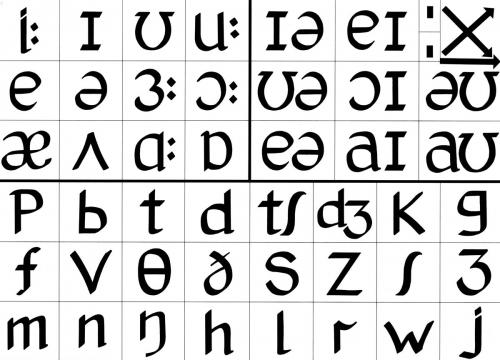
Adrian Underhill's phonemic chart. (I would probably do away with the centring diphthongs as they stand, using /ɛ:/ for /eə/ and maybe still keep /ɪə/)

I have completely embraced Adrian's belief and knowledge that "pronunciation is physical", and this motor side of pronunciation and our awareness of articulation through the different "buttons", as he calls them, is essential. However, out of his presentations, my independent reading, and my own teaching style, I have found that part of the process of acquisition of L2 features also lies on the images that we make of what the L2 features sound like.

Over the years, I have discovered that part of the fine-tuning processes we need to carry out to learn the sounds of L2 also involve affective aspects, including our own affective memory, and feelings. I have experienced situations in which students appear to be making the right articulatory movements, and still, there is something in the quality of the sound that does not "sound right". And in those cases, what I noticed is that it is the recourse to mental and affective images related to the sounds that appear to do the trick, rather than just the right lip or jaw position.

So in this post (which is, obviously, not a report on experimental research, so don't expect it to be so!), I will be going over a few techniques that I have used to include phonesthesia and realia in my pronunciation teaching. My focus this time will be on the STRUT vowel, /ʌ/, one which gave me a lot of trouble as a learner!

I will be covering a few different theoretical and practical areas on this post, which is why it will be divided into two:

Part 1: 
  • Speech Perception theories: a review with links to further reading materials.
  • English vowel STRUT /ʌ/and Spanish vowel /a/: a review.
Part 2:
  • Tips and tricks to teach STRUT
    • Articulation
    • Realia
    • Phonesthesia

***

Images, Categories, and Speech Perception Theories

When writing my research paper for my specialisation course in Phonetics I in 2006, I came across a huge number of acquisition and psycholinguistic theories which really helped me to make sense of and inform my teaching practices. Even though I am not an expert in acoustic or perceptual matters, I believe that some basic knowledge of theories of Speech Perception can actually aid our comprehension of what happens to our learners when faced with L2 pronunciation challenges.

Speech Perception Theories state that perception is categorical and not continuous (Liberman, 1985), that is, we perceive categories, no matter whether there is individual variation, and thus, we group sounds according to our perception. We can, in other words, say if a certain set of sounds are the same, or if they are different, despite the realisational differences of those sounds. The Perceptual Magnet Effect theory by Kuhl (1991) addresses similar issues for vowel sounds, by exploring in more detail how we can perceive the space or distance between the different variants we hear, to somehow establish what degrees of variation can be significant for us to associate a certain sound or stimulus to either another category, or to a "bad" (so to speak!) version of the category under scrutiny. This all appears to work pretty well for our L1, though there are a few "traps", as the McGurk effect reveals, when the information that the different senses provide do not appear to match:

If anything, the McGurk effect proves that we draw information from different multimodal sources, which is a very useful thing to know for those of us who train in L2 perception and production!

Now, when it comes to perception of L2 sounds, the "same-different" categorisation may fail, as we tend to interpret our L2 sounds from our own L1 targets, as Flege's Speech Learning Model (1995) states. So if we consider Kuhl's and Flege's models, we can predict that certain L2 qualities, if close to certain L1 targets, will be perceived as similar, and thus, learners may take longer to acquire them and create new categories for them.

Our learners, then, may create a mental image of what a particular L2 segment sounds like in the light of their already-existing images of the sounds in their L1. This means that in order to improve perception and production, we need to create new images and categories that will establish a perceptual distance between L1 and L2 sounds.

So in this post, I would like to explore the fact that one of the ways in which we can displace the L1 images in favour of L2 categories is by creating images that may exceed the information that the visual and tactile senses can give us for the articulation of the sound, and even the auditory information we can initially get. I would like to propose ways in which affective and visual memories can activate these new sounds in the shape of perceptual images.

***
The STRUT /ʌ/ vowel in General British

Cruttenden (2014:122) describes the STRUT vowel as a "centralised and slightly raised CV [a]" and he acknowledges the presence of a back-er quality [ʌ̞̈] in Conspicuous General British speakers, though this quality also appears to be heard more often in GB (I agree! See below). The jaws are said to be separated considerably, and the lips, neutrally open. There is an MRI of a phrase containing STRUT in Gimson's.... companion website here.

Collins and Mees (2012) have defined STRUT as a central, open-mid checked vowel, and admit a certain degree of variation, but especially in terms of fronter qualities. In much the same way, Mott (2011:117) describes STRUT as being "slightly forward of centre, just below half open, unrounded".

The abovementioned authors would then place STRUT somewhere around these areas:
Dark purple: STRUT, according to Mott & Collins and Mees. Light purple: Cruttenden (2014) and the backer quality [ʌ̞̈] he describes as a variant.

Geoff Lindsey has a great post called "STRUT for Dummies" with a myriad audio examples that illustrate his comments on the historical and present variation of STRUT, wavering between [ə] and [ɑ]-like qualities.

Many Argentinian colleagues and I believe that STRUT appears to be moving closer now to an [ɑ] quality, at least for many young speakers. I cannot claim to have the knowledge or "ear" that Lindsey happens to be blessed with, but here's an example of what I believe I hear pretty often:

Compare this young YouTuber Zoella's versions of "love", "until", "one", "somebody", "bump", "tummy", "just", "hundred". Apart from being great examples of intra-speaker variation (I personally don't hear all the versions of the word "love" with the same STRUT quality), there are some other interesting processes going on . (Also, a great taste of the kind of TRAP vowel I hear now, so different from General American versions!).

(BTW, according to Wikipedia, Zoella is from Wiltishire, and currently living in Brighton. What would you say her accent is?)

If we see these variations in acoustic terms (disclaimer: not at all my area of expertise...yet!), we can find in Rogers (2000) there is a table presenting formant values for RP vowels, based on a measurement of adult male speakers in Gimson, 1980. In that measurement, RP /ʌ/ has got the following values:
F1: 760 Hz
F2: 1320 Hz
( Confront with the values that the study by Wells in his 1962 study  had established F1:722, F2: 1236 )

(BTW, in simple terms, F1 inversely represents the articulatory tongue height, so that its higher frequency value represents lower tongue height. F2 represents degrees of backness, with lower values representing back-er vowels).

A study conducted by Hawkings and Midgley (2005) in four different age groups found the following mean formant values for these age groups:

  • F1:630 -F2:1213 for over 65s (higher than the previous studies mentioned, and a bit backer)
  • F1:643 F2:1215 for those speakers between 50-55 (lower than the over 65s, but equally central-back)
  • F1:629 F2:1160 for speakers in the age range 35-40 (higher than those 10 years older, and backer)
  • F1:668 F2:1208 for speakers aged 20-25 (lower than the other groups, but not as back as those speakers a bit older)
So according to this study, in comparison with the previous measurements reported, it would appear to be the case (at least for the speakers surveyed) that younger generations have a lower, and to a small degree, back-er STRUT than older generations).


If you are interested in pursuing this further, there are some interesting studies by
Ferragne and Pellegrini (2010), measuring vowels in 13 British accents.
Sidney Wood (SWPhonetics) analysis of different RP speakers' vowels across time.

***
Riverplate Spanish Vowel /a/

A contrastive analysis between General British and Riverplate Spanish (RS), and also the contributions of Speech Perception theories would lead us to expect that those students with RS as L1 are very likely to interpret English STRUT in the area of Spanish /a/ (not to mention distributional differences!). (BTW, in 2013 I attended a talk by Andrea Leceta at the III Jornadas de Fonética y Fonología, in which a comparative and experimental study on these features had been made, and the results confirmed these expectations. The proceedings have not yet been published, I am afraid.)

García Jurado and Arenas (2005) discuss Riverplate Spanish /a/ as having a wide degree pharyngeal of constriction (following the studies by Fant (1960) that focus the analysis of vowels based on the levels of constriction along the vocal tract) and clear oral opening and lack of lip rounding. They establish a mean F1:800 and F2:1200 values, which appear to match the degree of backness found for current versions of STRUT, though Spanish /a/ is much lower than English /ʌ/. 
Location of Spanish /a/ by Mott (2011)
You can see a cross-section of the articulation of /a/in Spanish and in English in these captures from the University of Iowa's Sounds of Speech app.


 Spanish /a/
(American) English /ʌ/


***
There appears to be an interesting similarity between Spanish /a/ and GB English /ʌ/ that lies mostly in the central part of the tongue employed, and an interesting difference, that is related to the height of the vowel and the level of jaw dropping, much higher than in Spanish, although they are both mid-to-low vowels. And still, it appears to me -and this is a very personal appreciation- that it is not jaw-dropping alone that makes our RS /a/ different from GB  /ʌ/. And my teaching of the sound over the years has also proven to me that jaw-dropping alone does not do the trick.

It may or it may not make sense to teach the exact quality of this sound to RS speakers, and it will depend on whether the focus of the lesson is on accentedness or on intelligibility, but the truth is that for an RS speaker, there needs to be a contrast between the three different qualities making up the contrast STRUT-TRAP-BATH in English, which to RS speakers may be only subsumed into one. 

So the next part of this post, coming up in a new weeks, I will present some "tips and tricks", rooted on some phonesthesic ideas, and also on realia techniques, that may help RS speakers turn their Spanish /a/s into STRUT.


After-post addition:
A reader rightly pointed out that I have not presented audio examples of my own of the difference between both sounds. So this is how I pronounce Spanish /a/ and English /ʌ/, and below you will find two Praat captures of the spectogram and formants of the same versions:


My Spanish /a/

My English /ʌ/